Loading...
Serving Beckley, WV and surrounding areas. (681) 238-4193
Bare concrete walls are quietly draining heat from your home every winter. We insulate your basement properly so the heat you pay for stays where it belongs.
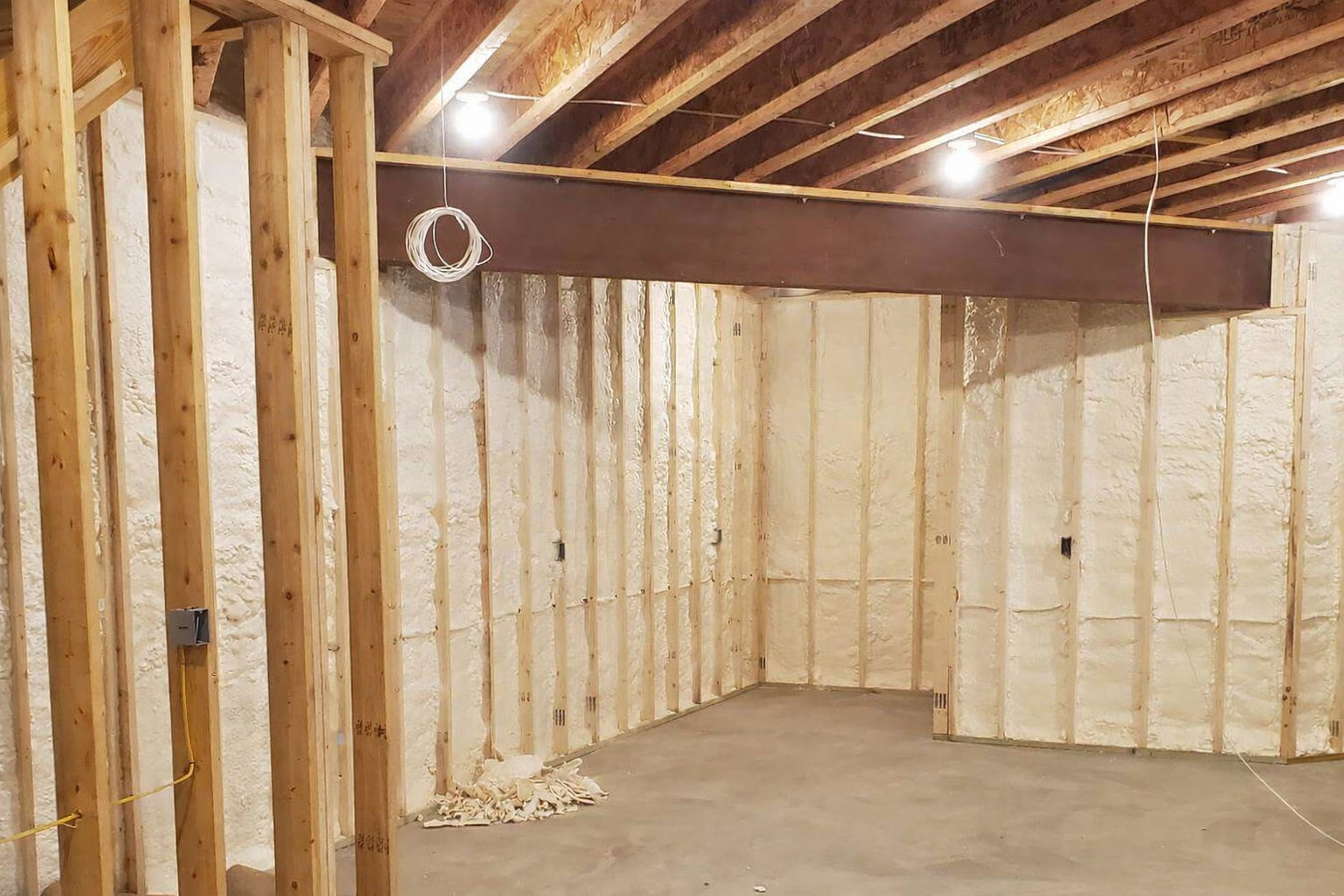
Basement insulation in Beckley, WV stops heat from escaping through uninsulated concrete or block foundation walls, most jobs are completed in one to two days for an average-sized home and cover the foundation walls, rim joists, and ceiling above the basement depending on how the space is used.
If your first floor feels cold in winter no matter how high you turn the thermostat, the basement is the most likely cause. Heat moves down and out through uninsulated concrete walls, and cold air rises up through the floor framing into your living space. Much of Beckley was built during the coal boom decades before basement insulation was standard practice, so bare walls in older homes are common. The good news is that this is one of the most straightforward improvements you can make - and the results show up in comfort and on your heating bill within the first full winter.
Basement insulation works best when paired with crawl space insulation if your home has both zones, since both areas pull heat from the living space above and both benefit from the same moisture assessment before work begins. The U.S. Department of Energy estimates that properly insulating and air-sealing a basement can reduce heating costs by 10 to 20 percent in many homes - a meaningful number in Beckley where the heating season runs long.
If the floors in your kitchen, living room, or hallways feel cold underfoot during Beckley's winter months even when the thermostat is set high, heat is escaping through an uninsulated basement. This is especially common in older Beckley homes where the basement was never insulated and cold air rises up through the floor framing into the rooms above.
If your gas or electric bill has been higher than it should be during the heating season and you have not changed your habits, an uninsulated or poorly insulated basement is one of the first places to look. Beckley's elevation means the heating season runs longer here than in lower-elevation West Virginia communities, so the cost of heat loss through bare walls compounds over months.
Moisture on basement walls or a persistent musty odor can signal water moving through the foundation - a condition common on Beckley's hillside lots where drainage runs toward the house. This does not automatically mean insulation right away, but it does mean a professional should assess the moisture situation before any insulation work begins. Insulating over a damp wall leads to mold and rot.
If you can see insulation in your basement ceiling or walls that is drooping, discolored, or pulling away from the framing, it has likely absorbed moisture and is no longer effective. Old fiberglass batts sag and compress over time, especially in humid basement environments. Insulation in this condition should be removed and replaced - leaving it in place hides moisture damage underneath.
Every basement insulation job starts with a thorough moisture assessment because insulating over a wet wall is worse than leaving it bare. Once we confirm the space is dry - or after moisture issues are resolved - we install insulation on the foundation walls, the rim joist, or the ceiling above the basement depending on how you use the space and what will give you the best return. For basements that are actively used for storage or laundry, wall insulation keeps the whole space above freezing and is the stronger long-term choice. We also pair basement work with our closed-cell foam insulation service when walls need both insulating and sealing power in the same material - which is common in older Raleigh County homes with poured concrete or block foundations.
The rim joist - the band of framing that sits on top of your foundation wall - is the single most neglected area in most Beckley basements. It is exposed to outside temperatures, almost always has gaps, and is easy to miss if you do not know to look for it. We treat it as a standard part of every basement insulation job rather than an add-on. For finished or partially finished basements we also offer ceiling insulation above the basement as a simpler option, and we carry full documentation of all materials for energy rebate and tax credit applications through Appalachian Power and federal programs - see the ENERGY STAR insulation guide for details on available credits.
Best for basements you use regularly - keeps the whole space warmer and protects pipes from freezing during hard Beckley winters.
Addresses one of the biggest air and heat loss points in older homes - included as a standard step rather than an optional upgrade.
Simpler and less expensive than wall insulation - a solid choice if your basement is unfinished and you mainly want to protect the living floors above.
Confirms the space is ready for insulation before any materials go in - protects your investment on hillside lots where seasonal water intrusion is common.
Beckley sits at roughly 2,400 feet elevation in Raleigh County - one of the highest-elevation cities in West Virginia. That means winters here are colder and longer than most of the surrounding region, with average January lows regularly dropping into the mid-teens to low twenties. Sustained freezing temperatures for months at a time put real stress on uninsulated foundation walls and the pipes running behind them. Much of Beckley's housing stock was built between the 1940s and 1980s, a period when basement insulation was rarely included in standard construction. If your home was built before 1990 and you have never had the basement insulated, there is a good chance you are losing a meaningful amount of heat through those walls every single winter.
The hilly Appalachian terrain around Beckley also creates a moisture challenge that homeowners in flatter areas do not face. Groundwater and surface runoff naturally migrate toward foundation walls on sloped lots, making seasonal damp basements a common complaint in this area. That is why we always assess moisture conditions before recommending or starting any insulation work - skipping that step is one of the most common ways insulation fails in this region. We serve homeowners across the area, including Oak Hill and Princeton, where the same older housing stock and hillside drainage patterns create the same insulation challenges.
We will ask a few basic questions about your basement - finished or unfinished, whether you have noticed any moisture - and schedule an in-home estimate, usually within a few days. You will hear back within one business day.
We walk your basement, check the walls, rim joist area, and any visible moisture. This visit takes 30 to 60 minutes and gives us everything needed to recommend the right approach for your specific home and foundation type.
You receive a clear written estimate covering scope, materials, and total cost - no surprise charges. Once you decide to move forward, we schedule your installation date and tell you exactly what to clear before the crew arrives.
Most jobs take one day. When complete, we walk you through what was installed, point out the rim joist and wall areas treated, and leave you with documentation for energy rebate applications. The space is cleaned before we leave.
Free estimate. No pressure. We will tell you honestly what your basement needs.
(681) 238-4193We check your basement for water intrusion before recommending any material. On Beckley's hillside lots where seasonal drainage toward foundations is common, skipping this step is how insulation fails. We do it as a standard part of every estimate - not an add-on.
The rim joist is the band of framing at the top of your foundation wall and one of the biggest sources of heat loss and cold-air infiltration in older homes. Most contractors treat it as an add-on. We include it as a standard part of every basement insulation job.
Many Beckley homes have partial basements, crawl space hybrids, or older foundation materials that require a different approach than a standard full-basement job. We have worked on these configurations across Raleigh County and know what to expect before the crew arrives.
Appalachian Power offers rebates for qualifying insulation improvements, and federal tax credits apply to many basement insulation projects. We leave you with the documentation you need to claim them - including material specs and installation records - before the truck pulls out of your driveway.
Every basement we insulate gets a moisture assessment, rim joist treatment, and complete material documentation before we leave. That combination - proper prep, thorough coverage, and records you can use - is what makes the difference between insulation that lasts 25 years and a job that needs to be redone after the first wet spring.
High-density spray foam that insulates and seals air gaps at the same time - often the right choice for concrete block and poured concrete basement walls.
Learn MoreInsulation for the low-clearance spaces under your home - often needed alongside basement work in Beckley homes built on hillside lots.
Learn MoreBeckley's heating season is long - the sooner your basement is insulated, the sooner you start saving on every bill from November through March.